
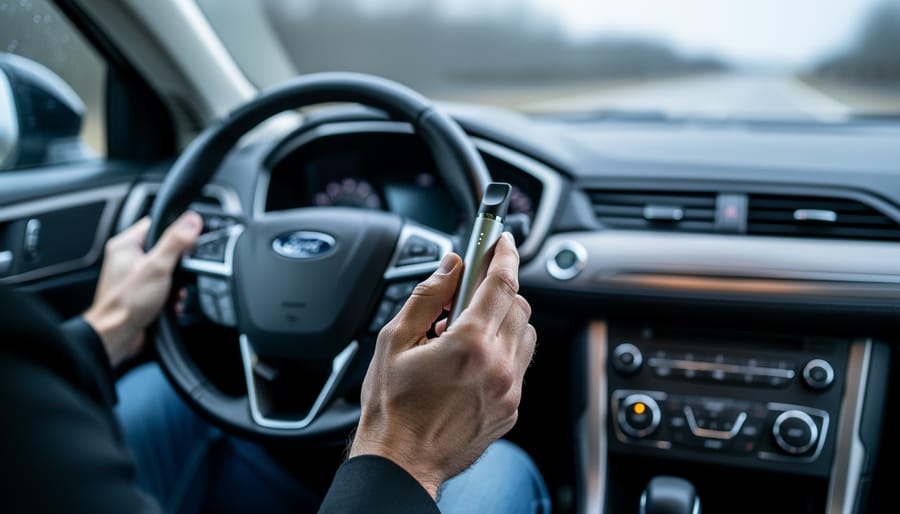
Vaping in your car is legal across Canada, but you need to know the exceptions before you hit the road. There’s no federal law stopping you from vaping while driving, and most provinces follow the same approach. The critical restriction? In Ontario and several other jurisdictions, it’s illegal to vape in any vehicle when someone under 16 is present, with fines reaching $250 for violations. Beyond child-protection laws, you also face potential careless driving charges if police believe your vaping creates a distraction or obstructs your view, even if you’re alone in the vehicle.
The bigger concern for many Canadian vapers is the cannabis distinction. While nicotine vaping falls into a regulatory gray area focused mainly on protecting minors, cannabis vaping follows strict impaired driving rules. The Criminal Code prohibits any degree of impairment behind the wheel, and consuming cannabis in a vehicle where you have care or control is illegal in Ontario, even if the car isn’t moving. Provincial laws layer additional restrictions on top of federal impaired driving statutes, creating a complex legal landscape that varies depending on where you’re driving and what you’re vaping.
Understanding these rules isn’t just about avoiding fines. It’s about protecting passengers, maintaining your driving record, and making informed choices every time you bring your vape into your vehicle.
The Federal Law on Vaping While Driving
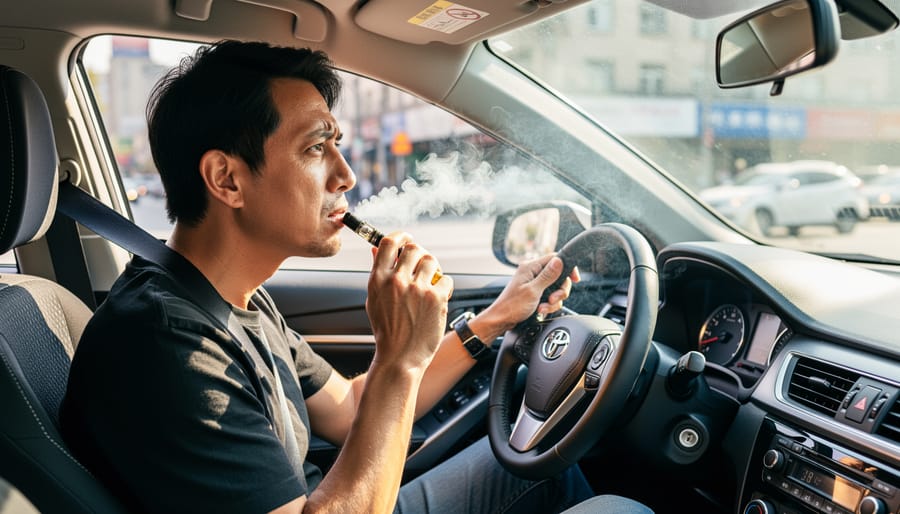
At the federal level, Canada doesn’t have a law that stops you from vaping or smoking while you’re behind the wheel. The federal government’s focus is on keeping impaired drivers off the road, that’s where their legal reach applies. Under the Criminal Code, impaired driving is prohibited when drugs, alcohol, or a combination of both affect your ability to operate a vehicle to any degree. But the act of vaping nicotine-based e-liquid? That’s not something federal law addresses or restricts.
This distinction matters because it shapes where the real rules come from. Since Ottawa hasn’t stepped in to regulate vaping while driving, the authority falls to provinces and territories. Each jurisdiction across Canada can set its own standards for when and where vaping in a car is allowed. That’s why you’ll find different rules depending on where you live or drive. Some provinces restrict vaping when minors are in the vehicle, while others focus on whether the behaviour interferes with safe driving. The takeaway here is simple: federal law leaves the door open, but your local rules might close it under specific conditions.
Provincial and Territorial Rules: Where Vaping in Cars Is Restricted
Ontario’s Rules on Vaping with Minors Present
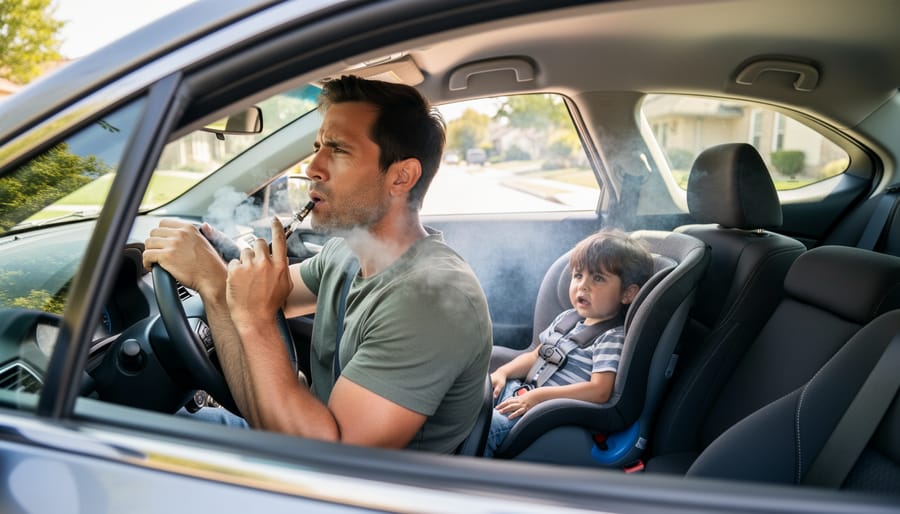
Ontario takes a firm stance on protecting children from secondhand exposure to vapour and smoke. Under provincial law, it’s illegal to smoke or vape in any motor vehicle when someone under 16 years old is present. This applies whether you’re the driver or a passenger, and it doesn’t matter if the windows are down or the air conditioning is running.
The rule exists because children’s lungs are still developing, making them especially vulnerable to the harmful effects of secondhand smoke and vapour. Confined spaces like car interiors concentrate these substances, even with ventilation, so the law aims to eliminate that risk entirely when kids are in the vehicle.
If you’re caught vaping with a minor in the car, you face a maximum fine of $250. Police can issue a ticket on the spot, and the penalty applies regardless of what you’re vaping, nicotine or otherwise.
The age threshold matters here. Once everyone in the vehicle is 16 or older, this specific restriction no longer applies, though other rules around distraction and impairment still hold. If you regularly drive with younger family members, friends’ kids, or anyone under 16, the safest approach is simple: wait until they’re out of the car. It’s a straightforward rule designed to keep the most vulnerable passengers safe.
How Other Provinces Approach Vaping in Vehicles
Beyond Ontario, most other Canadian provinces and territories have enacted similar laws aimed at protecting children from secondhand exposure to smoke and vapour in vehicles. The specifics vary: some jurisdictions set the age threshold at 16, while others protect anyone under 18 or 19. Fines differ as well, ranging from around $100 to several hundred dollars depending on where you’re caught.
For example, several provinces mirror Ontario’s approach by prohibiting smoking or vaping in a vehicle when minors are present, though the exact age cut-off and penalty amounts aren’t uniform across the country. British Columbia, Alberta, Saskatchewan, Manitoba, and the Atlantic provinces each have their own versions of these child-protection rules, and some extend the ban to enclosed spaces beyond just private vehicles.
The patchwork of provincial regulations means you can’t assume what’s allowed in one province applies everywhere. If you regularly drive across provincial borders or recently moved, it’s worth checking the specific rules in your new jurisdiction. A quick search for “smoking in vehicles with minors [your province]” will usually point you to the relevant legislation and current fines.
The common thread? Lawmakers across Canada agree that kids shouldn’t be exposed to secondhand vapour or smoke in the confined space of a car. The best practice is simple: if you have a minor in the vehicle, don’t vape, regardless of which province you’re in.
When Vaping Could Lead to Careless Driving Charges
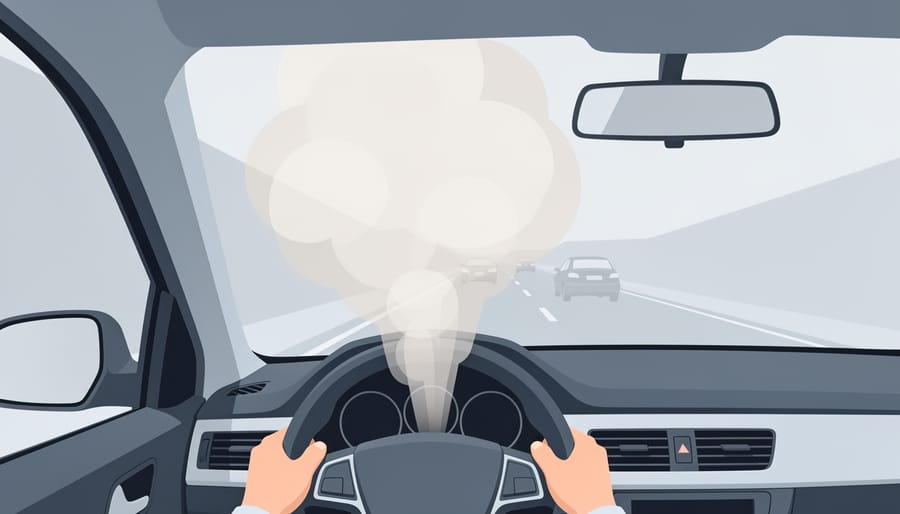
Even where no law explicitly bans vaping while driving, you can still face serious legal consequences if the act interferes with your ability to operate your vehicle safely. Police officers have the authority to charge drivers with careless or distracted driving when vaping compromises road safety, regardless of whether the vaping itself is technically permitted.
The most obvious risk involves visibility. High-powered vape devices can produce thick clouds that fill the cabin and obscure your view of the road, mirrors, or surrounding traffic. If an officer observes you driving through a cloud of vapour, or if your visibility appears compromised, you could be pulled over and charged. In Ontario, the law explicitly recognizes that smoking may support a careless driving charge if police believe it interfered with safe vehicle operation. The same principle applies to vaping.
Beyond cloud production, the physical act of vaping can divert your attention from driving. Fumbling with your device to adjust settings, refilling e-liquid, or replacing a coil while behind the wheel takes your hands off the wheel and your eyes off the road. Even momentary distractions at highway speeds can lead to accidents or near-misses that catch an officer’s attention.
Careless driving charges carry significant penalties, typically much higher than the maximum fine for vaping with minors present. You could face fines in the hundreds of dollars, demerit points on your licence, and increased insurance premiums. In serious cases where vaping contributed to an accident, the consequences escalate further.
The takeaway is simple: legal permission to vape doesn’t grant you carte blanche to vape carelessly. If your vaping creates a hazard or distraction, you’re opening yourself to enforcement regardless of what the specific vaping laws say.
Vaping Cannabis in Your Car: What’s Different
If you vape nicotine e-liquid, the rules we’ve covered so far apply: watch for minors, avoid distraction, and you’re generally fine. Cannabis is a different story altogether.
In Ontario and most provinces, smoking or consuming cannabis in a vehicle is illegal when you have care or control of that vehicle. That includes vaping THC. The law doesn’t distinguish between smoking a joint and vaping a cannabis oil, both are prohibited. You can’t vape cannabis in a car whether you’re driving, sitting in the driver’s seat with the keys, or even parked on the side of the road if you could reasonably be seen as in control of the vehicle.
The reason is straightforward: the Criminal Code prohibits driving while impaired by drugs to any degree. Cannabis impairs your ability to drive safely, and consuming it in or around a vehicle raises serious legal red flags. Police don’t need to catch you in motion. If they find you vaping cannabis while in the driver’s seat, you could face charges for impaired driving or having care and control of a vehicle while impaired.
This is very different from nicotine vaping, which doesn’t impair your driving ability in the eyes of the law. Cannabis vaping falls under the same strict framework as alcohol: you wouldn’t drink behind the wheel, and you can’t vape THC there either.
Even passengers need to be careful. In many provinces, consuming cannabis in a vehicle at all, driver or passenger, is prohibited. The rules vary, so check your local laws, but the takeaway is clear: keep cannabis vaping out of your car entirely. Save it for private spaces where you’re not behind the wheel or responsible for a vehicle. The legal and safety risks aren’t worth it.
Practical Tips for Vaping Safely and Legally While Driving
Before you turn the key or shift into drive, a few simple habits can keep you on the right side of the law and ensure you’re not putting yourself or others at risk. Vaping while driving is legal in most situations, but only when you approach it with common sense and awareness.
Start with the basics: scan your car for passengers. If anyone under 16 is riding with you in Ontario, or under 18 in some other provinces, put the vape away entirely. It’s not worth a $250 fine or the exposure risk to a young person. Next, make sure your device is ready before you pull out of the driveway. Fill your tank, choose the right size for your session, adjust your wattage, and lock any settings so you’re not fiddling with buttons while merging into traffic.
Here’s a practical checklist to follow every time:
- Check passenger age, no minors means you’re clear to vape nicotine where allowed
- Set your device before starting the engine, pre-fill, adjust wattage, lock settings
- Use lower-wattage settings to reduce cloud production and maintain visibility
- Pull over safely if you need to refill, change coils, or troubleshoot your device
- Never vape cannabis in or near your vehicle, it’s illegal and carries serious penalties
Keep your clouds manageable. Dense vapour that fills the cabin can obscure your mirrors, windshield, and blind spots, giving police grounds for a careless driving charge. Lower your wattage or take shorter draws to keep visibility clear. If your device starts leaking, sputtering, or needs attention, pull over. Trying to fix it while driving is a recipe for distraction.
Finally, know what you’re vaping. Nicotine e-liquid is one thing; cannabis is another. Vaping THC in a vehicle can land you an impaired driving charge, even if you’re parked with the engine off. Safety and legality aren’t separate concerns, they’re two sides of the same coin.
Common Questions About Vaping in Cars
Can I vape in a parked car?
Yes, you can vape in a parked car in most situations across Canada, but there’s a catch. If you’re in Ontario and a person under 16 is present, the same prohibition applies whether you’re parked or moving. The law targets secondhand exposure to minors, not whether the engine is running. In other provinces, check local child-protection laws, some jurisdictions set different age thresholds or apply rules only to moving vehicles. If you’re parked on private property and alone, you’re generally fine.
Does the type of e-liquid matter for legality?
The nicotine strength or flavour in your e-liquid doesn’t change the driving rules. Whether you’re using a freebase nicotine juice or a salt nic blend, provincial restrictions on vaping with minors present still apply. However, if you’re using a CBD vape bottle that contains no THC, you’re not crossing into cannabis consumption laws. Nicotine vaping falls under tobacco-related regulations, while THC-containing products trigger stricter cannabis laws, including the prohibition on consuming cannabis in a vehicle when you have care or control of it.
What if I’m vaping CBD in my car?
CBD vaping sits in a grey area that depends on the product’s content. Pure CBD e-liquids derived from hemp, with no THC, are generally treated like nicotine vaping for driving purposes, legal unless minors are present or you’re creating a distraction. Many vapers turn to CBD for anxiety relief during their commute, and as long as the product is THC-free, you’re not violating cannabis consumption laws. That said, always verify your product’s lab results. If your CBD vape contains even trace amounts of THC and police suspect impairment, you could face scrutiny under impaired driving statutes. When choosing best CBD strains for vaping, stick to verified zero-THC options if you’ll be driving.
Can passengers vape if the driver doesn’t?
Yes, passengers can vape if no minors are present and the vapour doesn’t distract the driver. The driver remains responsible for safe operation, so if clouds obstruct vision or cause a distraction, police could still charge careless driving.
What about vaping in a rental car?
Rental companies often prohibit smoking and vaping in their vehicles, with cleaning fees ranging from $150 to $400 for odour removal. While not a legal issue, violating the rental agreement can hit your wallet hard.
How likely am I to get pulled over for vaping?
Enforcement is rare unless you’re producing massive clouds that obscure your windshield or you’re spotted with a minor in the car. Police focus on impaired or distracted driving rather than routine vaping.
The bottom line: know your province’s rules, respect the presence of minors, and keep your vaping from interfering with safe driving. Most vapers navigate this without issue by staying aware and responsible.
So, is vaping in your car legal in Canada? The short answer is yes, but with important caveats you can’t ignore. While no federal law bans vaping behind the wheel, the rules shift depending on where you drive and who’s riding with you. If you’ve got minors in the car, many provinces including Ontario say no to vaping. If you’re puffing clouds so thick you can’t see the road, you’re risking a careless driving charge. And if you’re vaping cannabis? That’s a hard stop everywhere, no exceptions.
The key is staying informed about your province’s specific regulations and using common sense. Check whether kids are present, keep your visibility clear, and save adjustments to your device for when you’re parked. Remember that what’s technically legal isn’t always smart if it compromises your safety or distracts you from driving.
At the end of the day, responsible vaping means knowing the law and respecting it. We’re here to help you enjoy vaping as part of your lifestyle while staying on the right side of the rules and keeping everyone safe on the road.