
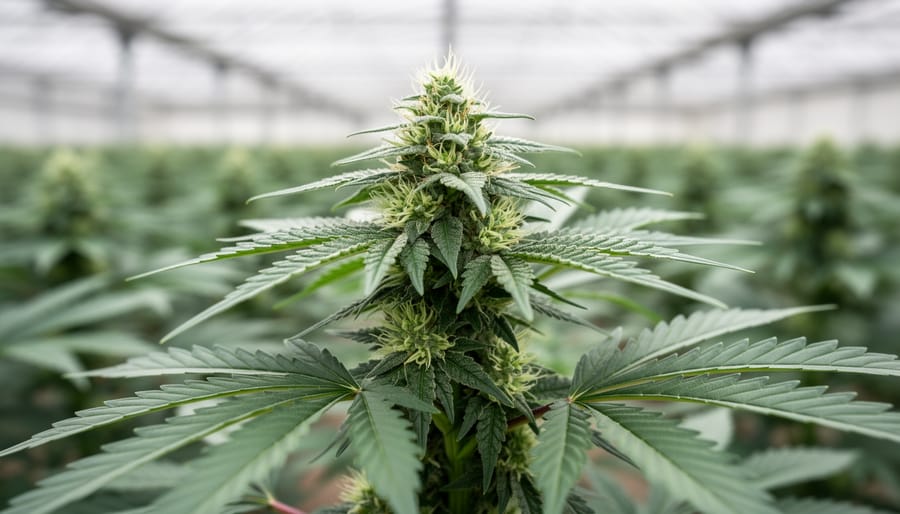
CBG, or cannabigerol, is a non-intoxicating cannabinoid found in cannabis and hemp plants that interacts with your body’s endocannabinoid system without producing a high. Often called the “mother cannabinoid” because other cannabinoids like CBD and THC are derived from its acidic form, CBG is gaining attention among vaping enthusiasts and wellness seekers for its unique profile and potential applications.
If you’re exploring alternatives to CBD or simply curious about what CBG brings to your vape experience, you’re asking the right questions. While research is still catching up to consumer interest, early studies and user reports suggest CBG may offer distinct effects compared to its better-known cousins. The compound appears in much smaller concentrations in most cannabis plants, which historically made it expensive and hard to find, but selective breeding and extraction advances have changed that landscape considerably.
This article breaks down what CBG actually does in your body, how it differs from CBD and THC, the practical ways people use it (particularly in vaping products), and what current evidence tells us about safety and effectiveness. We’ll cut through the hype, acknowledge where science hasn’t yet filled in all the blanks, and give you the grounded information you need to decide whether CBG fits into your routine.
What CBG Means: The Basics of Cannabigerol
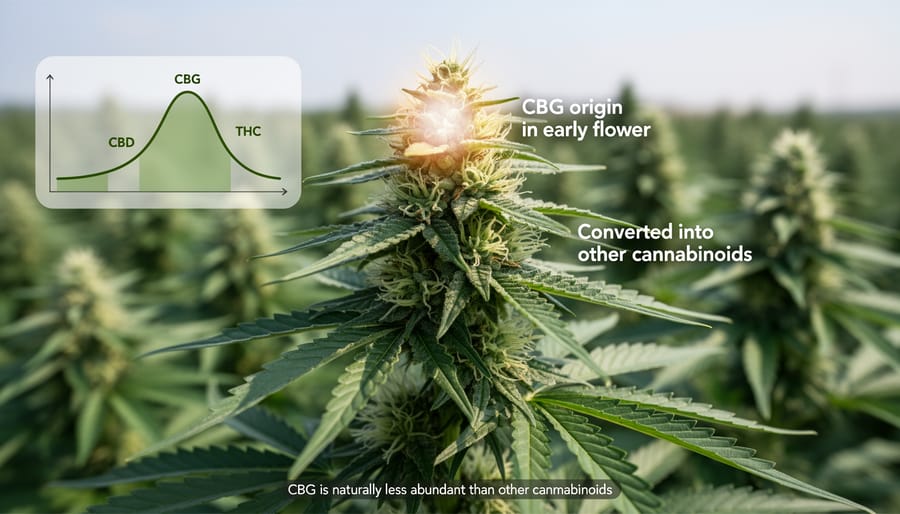
CBG, short for cannabigerol, is a naturally occurring compound found in cannabis and hemp plants. Unlike THC, CBG is non-intoxicating which means it won’t get you high or impair your cognition. It’s one of over a hundred cannabinoids identified in the plant, but it holds a unique place in the cannabis family tree.
Scientists often call CBG the “mother” or “stem cell” cannabinoid because of its foundational role. Technically, it starts as CBGA (cannabigerolic acid), the raw, acidic form that the plant produces first. As the plant matures and is exposed to heat or UV light, CBGA is the mother cannabinoid from which other major cannabinoids like CBD, THC, and CBC are synthesized. Without CBGA, the plant couldn’t produce the cannabinoids that have become household names.
Here’s a quick reference for the core terms:
- CBG (Cannabigerol)
- A non-intoxicating cannabinoid found in cannabis and hemp, often present in small amounts in mature plants.
- CBGA (Cannabigerolic Acid)
- The acidic precursor form of CBG and the starting compound from which CBD, THC, and other cannabinoids are derived as the plant develops.
- Non-intoxicating
- A substance that does not produce a high or impair mental or physical function, unlike THC.
- Precursor cannabinoid
- A cannabinoid that serves as the chemical foundation for the synthesis of other cannabinoids in the plant.
The catch with CBG is its scarcity. Most cannabis strains convert the majority of their CBGA into CBD or THC, leaving less than 1% CBG in the final plant. Extracting meaningful amounts requires either harvesting plants early (before conversion completes) or breeding specialized high-CBG strains. Both approaches are labour-intensive and costly, which is why CBG products often carry a higher price tag than their CBD counterparts. This rarity also means CBG has attracted less research attention and fewer large-scale clinical trials compared to CBD, though that’s beginning to shift as interest grows.
How CBG Works in the Body
CBG interacts with your body through the endocannabinoid system, a complex network of receptors, enzymes, and endogenous cannabinoids that helps regulate functions like mood, pain response, inflammation, and immune activity. Unlike THC, which binds strongly to CB1 receptors in the brain, CBG appears to work differently. Early research suggests it has a low binding affinity for both CB1 and CB2 receptors, meaning it doesn’t lock onto them the way some cannabinoids do. Instead, it may influence the ECS indirectly, possibly by modulating receptor activity or interacting with other pathways we haven’t fully mapped yet.
This is where things get tricky. Scientists think CBG might affect serotonin receptors, alpha-2 adrenergic receptors, and TRPV1 channels, mechanisms that could explain why some users report mood improvements, pain relief, or reduced inflammation. But the truth is, we don’t know the exact mechanism of action. The research is still in early stages, mostly limited to animal studies and isolated cell experiments. What we can say is that CBG seems to interact with multiple systems beyond the classic CB1 and CB2 pathways, which sets it apart from more thoroughly studied cannabinoids like CBD.
That uncertainty matters. When someone asks what CBG does in the body, the honest answer is that researchers are actively working to figure it out. Preliminary findings are promising, but the data is patchy. Health Canada’s ongoing regulatory work, including its exploratory consultation in 2025 and proposed amendments to include cannabinoids like CBD in natural health product frameworks, signals that oversight is catching up, but clinical evidence for CBG specifically remains limited.
For now, think of CBG as a cannabinoid with intriguing potential and a lot of unanswered questions. It’s not magic, and it’s not fully understood.
What Does CBG Do? Potential Uses and Applications
Reported Effects and Benefits
Early research and anecdotal reports from the vaping community suggest CBG may offer several potential benefits, though it’s crucial to understand these are emerging findings, not proven medical claims. Because CBG is less studied than CBD or THC, much of what we know comes from preclinical lab work, animal studies, and user experiences rather than large-scale human trials.
Based on preliminary evidence and user reports, CBG is being explored for:
- Anti-inflammatory properties that may help with discomfort and swelling
- Mood and focus support, with some users reporting improved clarity and calm
- Appetite stimulation, potentially useful for those with reduced food intake
- Eye health benefits, particularly reducing intraocular pressure
- Antibacterial activity against certain resistant bacteria strains
- Neuroprotective effects that could support brain health over time
Members of the vaping community who have tried CBG products often describe a clear-headed, subtle effect distinct from CBD. One user on a vaping forum noted feeling “more alert and less anxious without any grogginess,” while another described CBG as helping with daytime focus where CBD made them too relaxed. Some vapers blend CBG with CBD in their cartridges, reporting a more balanced experience than either cannabinoid alone.
However, these accounts remain personal experiences, not clinical proof. The scientific community is still working to understand CBG’s exact effects and therapeutic potential. As Health Canada noted in their recent consultation on cannabinoid products, authorization would require adequate evidence to support specific health claims, evidence that doesn’t yet exist in sufficient quantity for CBG. Until more rigorous human studies are completed, it’s wise to view these potential benefits as possibilities worth watching rather than established facts.
CBG in Vaping Products
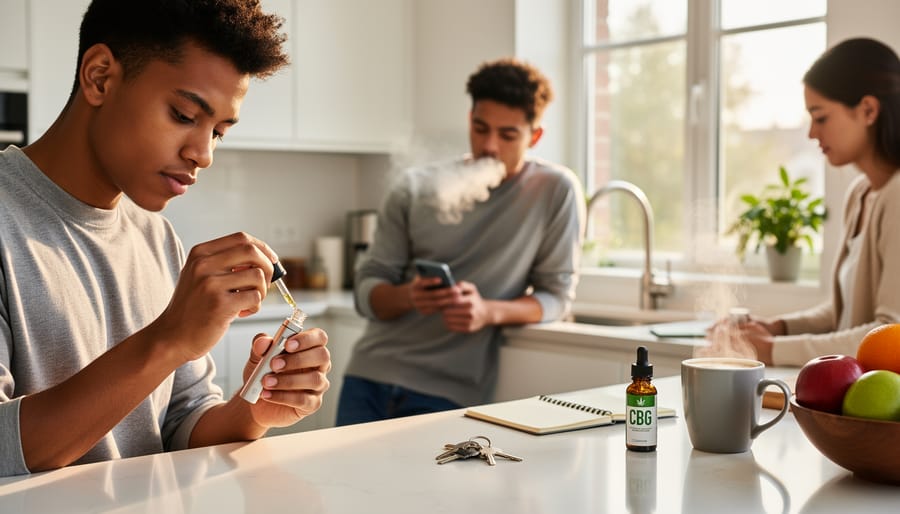
CBG has made its way into the vaping market primarily through specialized cartridges, vape oils, and e-liquids designed for pod systems and refillable devices. Manufacturers extract CBG from hemp and formulate it with carrier oils like MCT or blend it into vegetable glycerin and propylene glycol bases, depending on whether the product is meant for oil-based cartridges or standard e-liquid setups. When you vape CBG, it enters your bloodstream through the lungs, offering faster onset and higher bioavailability compared to edibles or tinctures. That quick absorption is a major draw for vapers who want effects within minutes rather than waiting an hour.
Some users prefer pure CBG vape products for a focused experience, while others opt for blends that combine CBG with CBD to leverage potential synergies between cannabinoids. If you’re already familiar with how to vape CBD the process is nearly identical, but CBG-only formulas can feel subtly different in their effects. Anecdotal reports suggest CBG may provide a clearer, more energizing sensation, though individual responses vary widely.
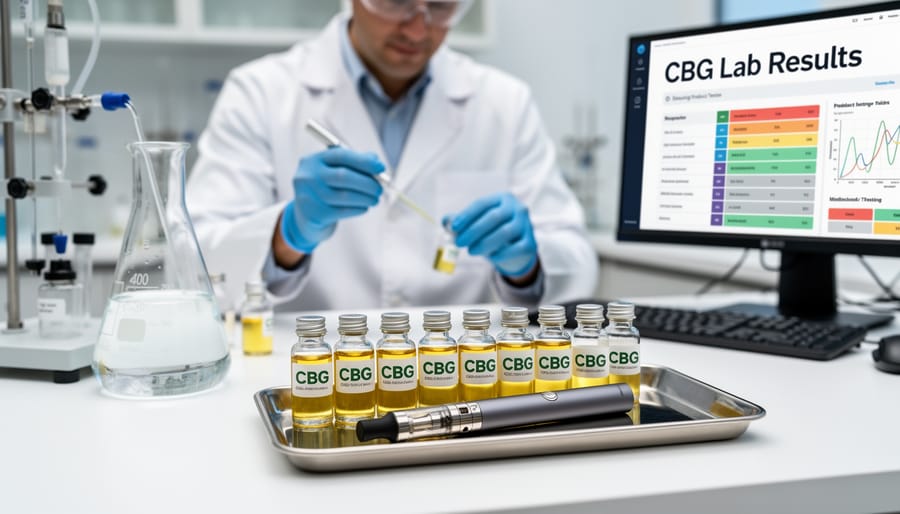
In 2026, you’ll find CBG vape products in disposable pens, pre-filled cartridges compatible with 510-thread batteries, and bottled e-liquids for refillable pods. Quality matters. Look for third-party lab testing that confirms cannabinoid content and screens for pesticides, heavy metals, and residual solvents. Transparent sourcing information, including where the hemp was grown and how it was extracted, signals a reputable brand. Regular maintenance helps too, make sure to clean your pod system to prevent residue buildup that can affect flavor and performance. As the market matures, expect more detailed labeling and consistency, but always verify lab results before purchasing.
Types of CBG Products and Delivery Methods
CBG comes in several formats, each suited to different preferences and lifestyles. Understanding the trade-offs helps you choose what fits your routine.
Vape oils and cartridges deliver CBG quickly into the bloodstream through the lungs, typically producing effects within minutes. This makes vaping ideal for users seeking fast relief or those already familiar with vaping culture. Pre-filled CBG cartridges offer convenience and controlled dosing, while refillable vape oils give you more flexibility. Look for products with transparent lab testing and clear cannabinoid profiles.
Tinctures are alcohol- or oil-based extracts taken sublingually (under the tongue). They absorb within 15 to 30 minutes and offer precise dosing via dropper. Tinctures appeal to users who want discretion and don’t vape. If you’re comparing oral options, tinctures vs gummies comes down to speed versus taste and convenience.
Edibles (gummies, capsules, infused foods) take longer to kick in, often 60 to 90 minutes, because they pass through the digestive system. Effects last longer but are less predictable due to individual metabolism. They’re popular among users who prefer familiar formats and don’t mind the wait.
Topicals (creams, balms, salves) are applied directly to the skin for localized use. They don’t enter the bloodstream significantly, making them a choice for targeted application without systemic effects.
Isolates are pure CBG powder or crystals, free of other cannabinoids. You can add them to food, beverages, or DIY vape mixes for customizable dosing.
Full-spectrum vs. isolate is a key distinction. Full-spectrum products contain CBG plus other cannabinoids, terpenes, and trace compounds, potentially creating an “entourage effect” where components work together. Isolates offer CBG alone, appealing to users who want one compound without THC or other cannabinoids. Your choice depends on whether you value simplicity or the potential synergy of the whole plant.
Safety, Side Effects, and What to Know
CBG is generally considered well-tolerated based on early evidence, but it’s crucial to understand that research on this cannabinoid is still in its infancy. Most of what we know about cannabinoid safety comes from CBD studies, and we’re applying that knowledge cautiously to CBG. CBD can cause these side effects like dry mouth, diarrhea, and reduced appetite, and there’s a reasonable chance CBG might produce similar reactions in some users. However, specific clinical trials examining CBG’s side effect profile in humans are scarce, so we’re working with limited data.
Anecdotal reports from vapers and early adopters suggest CBG is gentle for most people, but individual responses vary. If you’re trying CBG for the first time, start with a low dose and pay attention to how your body reacts. This is especially important if you’re using other medications, as cannabinoids can sometimes interact with prescription drugs.
The vaping space presents its own set of considerations. Quality matters enormously when you’re inhaling any substance. Look for CBG vape products that come with third-party lab certificates verifying cannabinoid content, confirming the absence of heavy metals, pesticides, and cutting agents like vitamin E acetate. Reputable brands will make these test results easy to find. Check out buying tips for cannabinoids if you want guidance on evaluating product quality without overspending.
The regulatory landscape is evolving. Health Canada published an exploratory discussion paper on cannabinoid health products in March 2025 and received 135 submissions during the consultation period. This signals that oversight is tightening, which should eventually mean better consumer protections and clearer labeling standards. Until comprehensive regulations are in place, the responsibility falls on you to research brands and choose wisely.
Frequently Asked Questions About CBG
What is CBG?
CBG, or cannabigerol, is a non-intoxicating cannabinoid found in cannabis and hemp plants. It’s often called the “mother cannabinoid” because other cannabinoids like CBD and THC are derived from its acidic precursor, CBGA, during the plant’s growth cycle.
Is CBG safe and effective?
CBG is generally considered well-tolerated based on early evidence, though rigorous clinical studies in humans remain limited. Like CBD, it may cause mild side effects such as dry mouth, diarrhea, or reduced appetite. Health Canada is currently exploring regulatory frameworks for cannabinoid health products, which signals growing interest in establishing safety and efficacy standards.
How is CBG different from CBD?
While both are non-intoxicating cannabinoids, CBG interacts with the endocannabinoid system differently than CBD and is much less abundant in most cannabis plants. Users report that CBG may offer distinct effects, particularly around focus and energy, whereas CBD is often associated with relaxation. Because CBG is rarer, products tend to be pricier.
Will CBG get you high?
No. CBG is non-intoxicating and won’t produce the euphoric or impairing effects associated with THC. You can use CBG vape products, tinctures, or edibles without worrying about feeling “high.”
Beyond these fundamentals, you might also wonder about the depth of research backing CBG. The honest answer is that we’re still in the early stages. While anecdotal reports from vapers and preliminary lab studies suggest promising applications for inflammation, mood support, and other uses, large-scale human clinical trials are scarce. Regulatory bodies like Health Canada are working to develop frameworks that require adequate evidence before cannabinoid products can make specific health claims, but those standards are still evolving. For now, treat CBG as an emerging wellness tool with potential, not a guaranteed solution backed by decades of medical research.
If you’re considering CBG, focus on product quality. Look for lab-tested vape oils and cartridges from transparent brands that provide certificates of analysis. The vaping community has been a proving ground for CBG, with many users sharing firsthand experiences about what works and what doesn’t. Pay attention to those insights, but remember that individual responses vary widely. What helps one person focus or relax might do little for another, and that variability is normal when working with compounds this new to the consumer market.
The Bottom Line on CBG
So, where does that leave us with CBG in 2026? The honest answer is: in early days. CBG is a non-intoxicating cannabinoid with intriguing potential, backed by preliminary findings and genuine enthusiasm from early adopters in the vaping community. But it’s not a magic bullet, and the science is still catching up to the hype. We don’t have large-scale human trials pinning down exactly what CBG does, how it does it, or who benefits most. What we do have are promising lab results, anecdotal reports, and a growing body of evidence that suggests CBG deserves more attention.
That’s why it’s crucial to approach CBG with informed optimism rather than blind faith. Choose products from transparent brands that provide third-party lab testing, especially if you’re vaping. Pay attention to how regulatory bodies like Health Canada are evolving their frameworks, these shifts signal that oversight is tightening, which ultimately protects consumers. And view CBG as part of a broader wellness strategy: good sleep, nutrition, and stress management still matter more than any single supplement.
If you’ve tried CBG, we’d love to hear about your experience. What worked? What didn’t? Sharing real-world insights helps the whole community learn. Keep following E-liquide Source as new research emerges, we’ll be here to translate the science, spotlight quality products, and keep the conversation grounded in evidence, not empty promises.